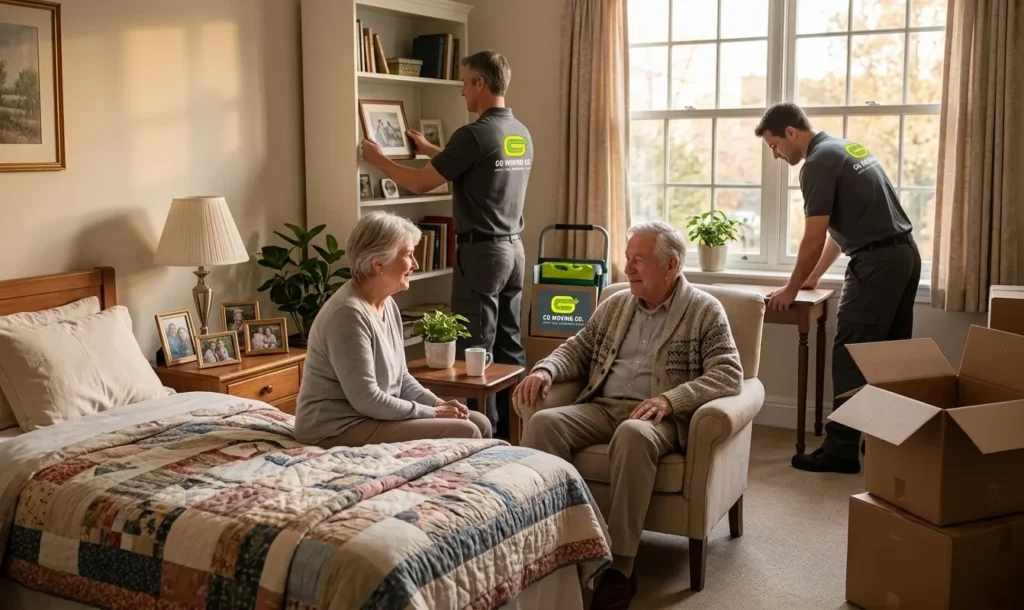
Homeowners associations in the Bay Area often have their own move-in and move-out rules layered on top of anything your lease or purchase agreement covers, and those rules vary significantly between buildings. At CG Moving Company, we coordinate residential moves with HOAs regularly, and three requirements come up more than any others: insurance documentation, scheduling windows, and move-related fees.
What Does an HOA Typically Require for Insurance?
Usually a certificate of insurance naming the HOA as additional insured.
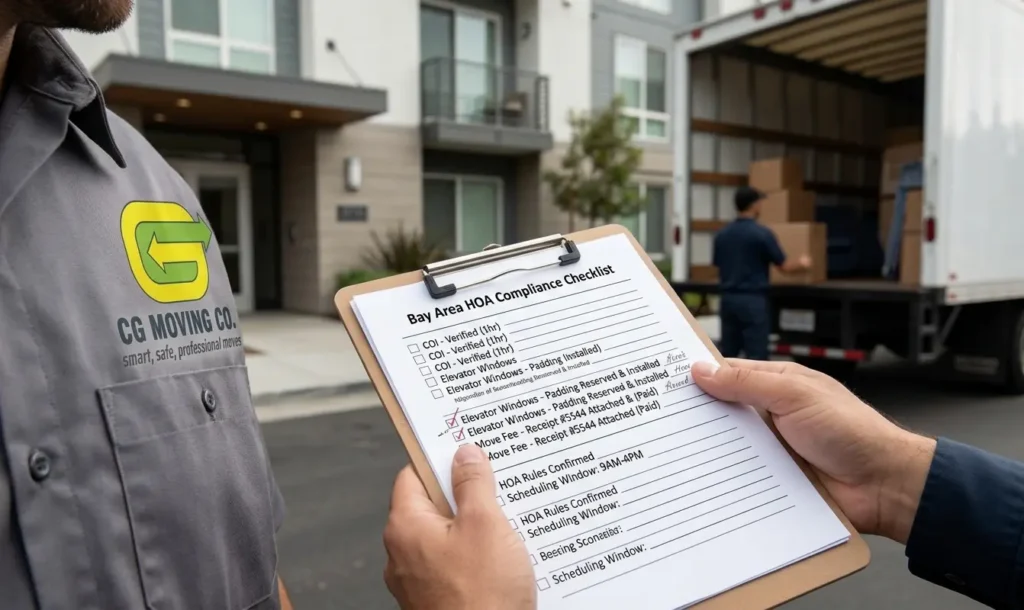
A certificate of insurance is one of the most consistent HOA requirements across Bay Area buildings, and it generally needs to name the HOA or its management company as an additional insured for the specific move date. This is meant to protect common areas like lobbies, elevators, and shared hallways in case of accidental damage during the move. Some HOAs have specific coverage wording they require, so it’s worth confirming the exact language they expect rather than submitting a generic document and hoping it’s accepted.
How Do HOA Elevator or Moving Windows Usually Work?
A reserved time block, often booked through the HOA office.
Many HOAs, especially in condo and townhome communities with shared elevators or narrow access points, require move-ins and move-outs to happen within a reserved time window rather than at any point during the day. This is usually booked through the HOA’s management office or an online portal, and popular windows (weekend mornings, for instance) can fill up fast. Booking this window as soon as your move date is confirmed avoids losing your preferred time slot to another resident.
What Kinds of Move Fees Do HOAs Commonly Charge?
Factors vary; ask the HOA directly rather than assuming none apply.
Move-related fees vary widely between HOAs, and what’s charged, if anything, depends entirely on that specific community’s rules. Some communities have no move fee at all, while others charge based on factors like elevator use, extended access windows, or administrative processing. Rather than assuming a fee does or doesn’t apply, the most reliable approach is asking your HOA or management company directly what, if anything, applies to your specific move.
Where Do You Find Your HOA's Specific Moving Rules?
Your HOA handbook, management company, or the board directly.
Your HOA’s specific moving rules typically live in the community handbook or CC&Rs (covenants, conditions, and restrictions) that you received when you bought or leased in the community. If you can’t locate that document, the management company or HOA board can usually provide a copy or a summary of move-specific requirements. It’s worth requesting this in writing rather than relying on secondhand information from a neighbor, since rules do get updated and not everyone has the current version.
What Happens if You Don't Follow HOA Moving Rules?
Possible delays, access issues, or disputes over fees after the fact.
Skipping an HOA requirement, whether it’s insurance, a scheduling window, or an unpaid fee, can lead to access being denied at the elevator or loading dock, a delayed move-in, or a dispute over charges after the fact. Since these rules are set by the HOA rather than the moving company, the most effective fix is confirming requirements directly with the HOA before your move date, not during it. If insurance documentation is the piece you’re unsure about, understanding what a certificate of insurance actually covers is a good place to start.
HOA rules add an extra layer of coordination to a Bay Area move, but they’re manageable once you know which three things to confirm: insurance, scheduling, and fees. If you’d like help pulling together the documentation your HOA requires, reach out to our team and the CG Moving Company office can help coordinate directly with your management company.
Frequently Asked Questions
Can CG Moving Company send the certificate of insurance directly to my HOA?
Yes, once you tell us which HOA or management company needs it and what wording they require, we can send the certificate of insurance directly to them rather than routing it through you. This usually speeds up approval compared to forwarding it yourself.
What if my HOA requires specific padding or protection for the elevator that our crew doesn't normally bring?
Tell us the specific requirement as soon as you know it, ideally when you book. Our crews already bring standard floor and elevator protection, and we can bring additional material to match a particular HOA’s request if it’s outside our usual setup.
Can the move still happen if the HOA hasn't confirmed the elevator or moving window yet?
We strongly recommend getting that window confirmed before moving day, since an unconfirmed slot risks your crew being turned away or delayed at the building. If the window is still pending close to your date, let your coordinator know so we can plan around the uncertainty.
Do HOA move-in rules work the same way as move-out rules?
Generally yes, most HOAs apply the same insurance, scheduling, and fee requirements to both move-ins and move-outs. It’s still worth confirming with your specific HOA, since a few communities do treat the two directions differently.
Need help pulling together what your HOA requires for moving day? CG Moving Company can coordinate the paperwork directly with your management company.