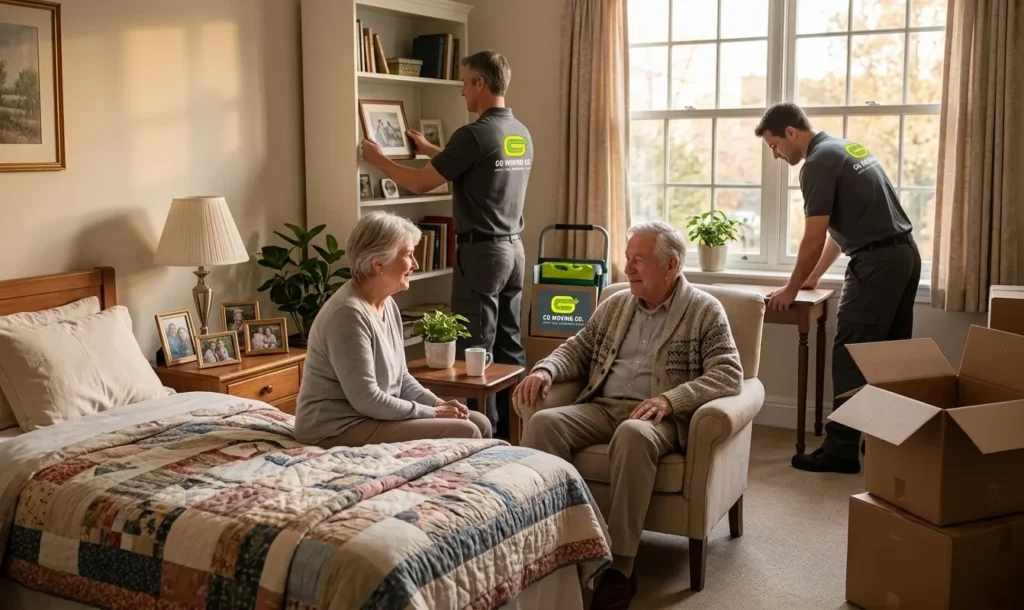
A certificate of insurance, or COI, is a document that proves a moving company carries specific types and amounts of insurance coverage, and most Bay Area apartment, condo, and office buildings require one before move-in day. At CG Moving Company, we provide COIs as a standard part of residential moves into buildings that request one.
What Information Does a Certificate of Insurance Actually Show?
The mover’s liability and worker’s comp coverage types and limits.

A certificate of insurance lists the types of insurance a company carries, typically general liability and worker’s compensation, along with the coverage limits for each. It often also names specific parties, like a building or management company, as an “additional insured” for a defined period, usually your move date. This document comes directly from the insurance provider or broker, not from the moving company itself, which is part of why it carries weight as proof of actual coverage.
Why Do Buildings Require a COI Before Move-In?
To confirm coverage exists if common areas are damaged.
Buildings request a COI mainly to protect themselves financially if something is damaged in common areas, hallways, elevators, lobbies, during a move. Since movers and their equipment are temporarily operating in spaces the building is responsible for, management wants assurance that there’s insurance coverage behind any accidental damage, rather than relying on goodwill alone. This is standard practice across the Bay Area rental, condo, and HOA market, not something unique to any one property.
Who Requests the COI, and Who Provides It?
The building requests it; the moving company’s insurer provides it.
The building, HOA, or property management company is the one that sets the COI requirement and specifies exactly what it needs to include, sometimes down to specific coverage minimums or exact wording for the additional-insured language. The moving company then requests this document from its own insurance provider, tailored to that specific building’s requirements. This is a routine request for an established moving company, usually turned around within a business day or two.
How Far Ahead of Moving Day Should You Request One?
At least a few business days, since requirements vary by building.
Requesting a COI at least a few business days before your move date is a safe general rule, though some buildings have faster turnaround and others need more lead time, especially if their requirements are unusually specific. Since HOA and building rules vary so much, confirming the exact requirement with your building as soon as you know your move date avoids a last-minute request that doesn’t leave enough processing time.
What Happens if a Building's COI Requirement Isn't Met?
Expect denied access, a delay, or a last-minute rescheduling.
If a building’s COI requirement isn’t met by moving day, the most common outcome is being denied freight elevator or loading dock access until it’s resolved, which can mean a delay of hours or, in some cases, a full reschedule. This is why requesting the COI early matters so much. The team at CG Moving Company handles this request directly once we know your building’s specific requirements, so it’s one less thing on your plate.
A certificate of insurance is a standard, routine document for most Bay Area moves, and requesting it early keeps your move-in day on schedule. If your building has specific COI requirements, share them with our team ahead of your move and we’ll take care of getting it submitted.
Frequently Asked Questions
If we've moved into the same building before, does our old COI still work?
Buildings generally want a COI dated close to your specific move, so a certificate from a previous move usually needs to be reissued even if nothing about our coverage has changed. It’s a quick request on our end once we know the move date. We’d rather send a fresh one than have a building reject an old one on move day over a date mismatch.
What if our building requires specific wording on the COI that your standard certificate doesn't include?
We can usually accommodate specific wording requirements, like an exact additional-insured clause or a particular certificate holder name, by requesting it directly from our insurance provider. This sometimes takes a day or two longer than a standard COI, so flagging the exact requirement as early as possible helps us avoid a last-minute scramble. If you have a sample from a previous vendor or your building’s own template, sharing it with us speeds this up.
Should the COI be sent to us, or directly to the building management office?
We can send it either way, though sending it directly to building management is usually more reliable, since they’re the ones checking it against their requirement before granting access. We’re happy to send you a copy as well so you have it on hand. Just let us know which contact at the building should receive it.
Does a COI cover damage that happens inside our actual unit, or only in common areas?
A COI itself is proof of coverage, not a claims document, so it doesn’t change what is or isn’t covered inside your specific unit versus common areas. Our general liability coverage can apply to damage in either location depending on the circumstances, which is a separate conversation from the COI requirement itself. If something happens during your move, raise it with our team directly rather than relying on the COI language to answer that question.
Send us your building’s specific COI requirement as soon as you have a move date, and we’ll get the paperwork moving right away.