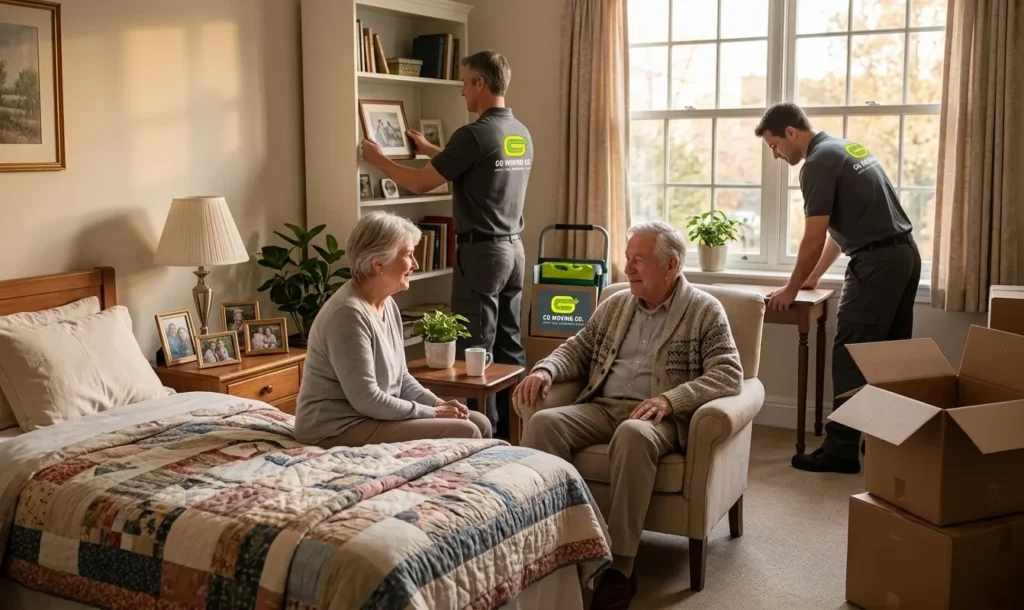
California state employees who are relocating for work can use a mover that holds approved carrier status with the California Department of General Services, which simplifies the process of booking an authorized household goods move. CG Moving Company holds this DGS-approved status, and our state employee relocation page outlines exactly how the process works for eligible staff.
What Does DGS-Approved Carrier Status Actually Mean?
The state has vetted the carrier to handle authorized employee relocations.

DGS-approved carrier status means the state has reviewed and accepted a moving company as eligible to perform authorized relocations for state employees and agencies. It’s not a general business license. It’s a specific designation tied to California Department of General Services procurement and vendor standards. For a state employee, this status matters because it confirms the carrier meets the state’s own requirements for this type of move, rather than leaving that verification up to the employee during a transfer.
Who Typically Qualifies for a State-Authorized Household Move?
Employees relocating under an approved transfer or appointment, per policy.
Eligibility for a state-authorized relocation generally depends on your department’s own transfer or relocation policy, which outlines who qualifies and under what circumstances, such as a required transfer, a new appointment in a different location, or another department-defined situation. Since policies vary by department and by the specific terms of your appointment, the most reliable first step is confirming your own eligibility and authorization directly with your HR or relocation coordinator before assuming a move qualifies.
What Paperwork Is Usually Involved Before Booking?
Authorization from your department, plus a standard moving estimate.
Before booking, most state employees need written authorization from their department confirming the move is approved under their relocation policy. Beyond that, the process looks similar to any household move: an inventory walkthrough, a moving estimate, and a confirmed date and crew size. The main difference is that your documentation needs to clearly tie the move to your approved transfer, since that’s what connects the move to DGS-approved carrier requirements rather than a standard personal relocation.
How Does the Process Differ From a Regular Household Move?
Mostly in required documentation and approved-carrier verification, not logistics.
Logistically, loading, transport, and unloading work the same way they would for any residential move: a crew walkthrough, careful packing and protection of your belongings, and delivery to your new address. What differs is primarily administrative. Your department may require specific documentation, a particular invoicing format, or coordination between your HR office and the moving company. Confirming these details early, rather than during the move itself, keeps the process running smoothly on both ends. Valuation coverage still applies the same way it would for any household move.
What Should You Confirm Before Your Move Date Is Set?
Authorization approval, moving dates, and any department-specific requirements.
Before locking in a move date, confirm your department’s authorization is fully approved and in hand, since this is usually the step that determines everything else. Confirm your preferred moving date and any flexibility around it, and ask your department whether there are specific requirements around documentation, timing, or communication with the moving company. The team at CG Moving Company works directly with state employees on this process regularly and can answer carrier-specific questions once your authorization is settled.
How Is DGS Approval Different From a GSA Schedule Contract?
DGS covers state employee moves; a GSA Schedule contract covers federal agency ordering.
Agencies and employees sometimes ask how our various credentials relate to one another, since CG Moving Company holds more than one. The short version is that each credential applies to a different buyer: DGS-approved carrier status is specific to California state employee relocations, while a GSA Schedule contract is what lets federal agencies order moving services through GSA Advantage. The two aren’t interchangeable, and a state employee move doesn’t require, or benefit from, the federal credential, and vice versa.
A DGS-approved carrier simplifies the logistics of a state-authorized household move, but the authorization itself still comes from your own department. If you’re a California state employee planning a relocation, contact our team to talk through the process and confirm what we’ll need on our end.
Frequently Asked Questions
Does DGS-approved carrier status cover a move to a job outside California?
No, DGS-approved carrier status applies specifically to relocations within California tied to a state employee’s transfer or appointment. A move out of state would fall under different authority and typically a different authorization process through your department.
Who does CG Moving Company invoice for a DGS-authorized state employee move?
Invoicing is typically directed to the employee’s department under their approved relocation policy, not to the employee personally. The exact process still depends on your department’s own procedures, so we confirm invoicing details as part of setting up the move.
Can you start scheduling before my department's authorization is fully approved?
We can hold a tentative date while you’re waiting on final sign-off, but we need the written authorization in hand before the move is fully confirmed. Let your coordinator know where things stand so we can plan around the timing.
What happens if my transfer falls through after the move is already scheduled?
Contact us as soon as you know, the earlier the better for adjusting the crew and truck assignment. We’ll work with you on rescheduling or canceling depending on where things stand with your department.
Planning a California state employee relocation? Contact CG Moving Company and we’ll confirm what we need once your department’s authorization is in place.