Household movers in California can’t legally load certain hazardous, perishable, or highly valuable items onto the truck, and knowing this list ahead of time saves a scramble on moving day. At CG Moving Company, we go over these categories during the residential move walkthrough so nothing holds up loading when the crew arrives.
What Hazardous Materials Can't Go on the Truck?
Propane, gasoline, aerosols, paint, pool chemicals, and similar items.
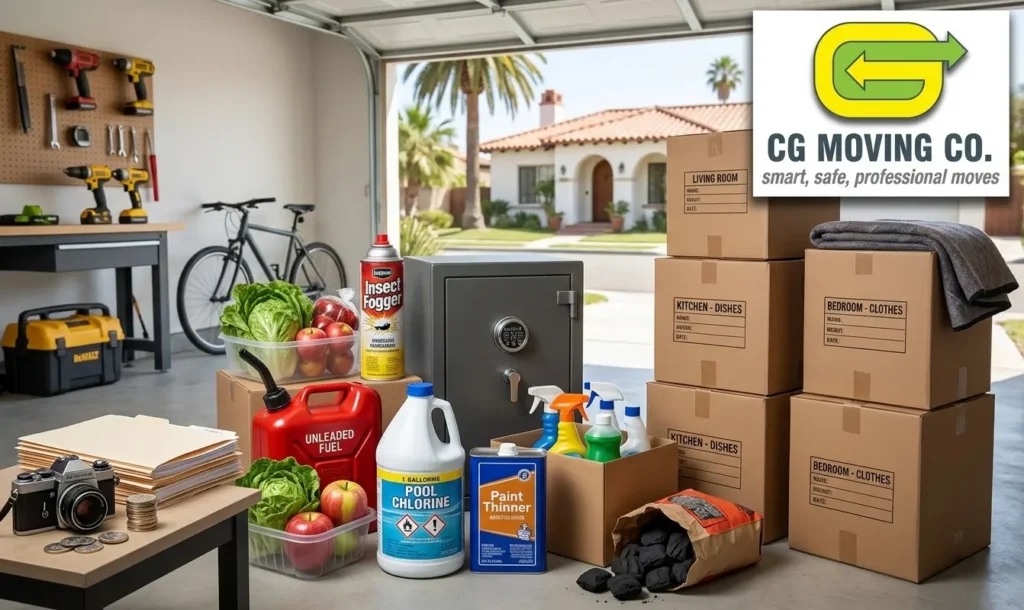
Flammable and hazardous materials are the biggest category movers are restricted from transporting, for safety reasons that apply to every household move in California. This includes propane tanks, gasoline and other fuels, aerosol cans, paint and paint thinner, pool chemicals, cleaning chemicals, and anything pressurized or combustible. Car batteries and certain lawn equipment with fuel still in the tank fall into this category as well. These restrictions aren’t specific to any one moving company. They apply broadly across the industry because of how these materials behave in an enclosed truck.
Can Movers Transport Perishable or Live Items?
No. Perishable food, plants in some cases, and live animals stay with you.
Perishable food, particularly anything refrigerated or frozen, generally isn’t transported by movers, since there’s no way to guarantee safe temperatures over a multi-hour move. Some movers also have restrictions around live plants, especially for longer-distance moves, due to both spoilage risk and, in some cases, agricultural regulations between regions. Live animals are never transported on a moving truck under any circumstances. Pets need their own transportation plan, separate from the moving truck entirely.
What About Firearms, Valuables, and Important Documents?
These should generally travel with you, not on the moving truck.
Firearms, ammunition, cash, jewelry, and irreplaceable documents like passports, birth certificates, and property deeds are typically excluded from what movers will transport, not always because it’s illegal, but because of liability and practicality. These items are safest traveling with you directly, where you control custody the entire time. If you have specific questions about binding versus non-binding estimates and how valuables factor into coverage, that’s worth raising before moving day, not during it.
Are There Items That Are Technically Allowed but Risky?
Items with no real replacement value are safer in your own car.
A handful of items are technically allowed on the truck but still worth transporting yourself if you can. Sentimental items with no real replacement value, like family photos or heirlooms, fall into this category. The same goes for anything you’d be devastated to lose even with valuation coverage in place, since reimbursement never fully replaces sentimental value. If an item would keep you up at night thinking about it on a truck, it’s usually worth the extra care of carrying it yourself.
What Should You Do With Items That Can't Be Moved?
Use them up, dispose of them properly, or transport them yourself.
For items that genuinely can’t go on the truck, the solution depends on the category. Hazardous materials like paint, chemicals, or propane should be used up, given away, or disposed of through a certified household hazardous waste program well before moving day. Perishable food is best used, donated, or discarded in the days leading up to the move. For valuables and important documents, simply plan to transport them yourself in your own vehicle. The team at CG Moving Company can walk through your specific inventory and flag anything that falls into these categories during your estimate.
Knowing what can’t go on the truck ahead of time means moving day stays on schedule instead of stalling over a forgotten propane tank or a box of chemicals. If you’re unsure whether something in your home falls into a restricted category, ask our team before your move and we’ll help you sort it out in advance.
Frequently Asked Questions
What happens if a mover discovers a restricted item on the truck after loading has already started?
We stop and set the item aside rather than continuing to load it, even if that means pausing briefly. It is faster and safer to handle it in the moment than to try to sort it out once the truck is already on the road.
Are frozen items from a freezer treated the same as refrigerated food?
Yes, frozen food falls under the same restriction as refrigerated food, since there’s no way to guarantee it stays at a safe temperature for the length of a move. Plan to use it up, give it away, or transport it yourself in a cooler.
Do the same restricted-item rules apply to a local move and a long-distance move?
The hazardous and perishable restrictions apply to both, but long-distance moves add extra limits around plants and certain agricultural items due to regulations between regions. A local move within the Bay Area has fewer of those added restrictions.
Can movers transport prescription medication?
Movers can technically transport it, but we recommend keeping medication with you rather than on the truck. If you need it during the trip or the truck is delayed, you don’t want to be without it.
If you’re not sure whether something in your home falls into a restricted category, send us a quick list before moving day and we’ll confirm.