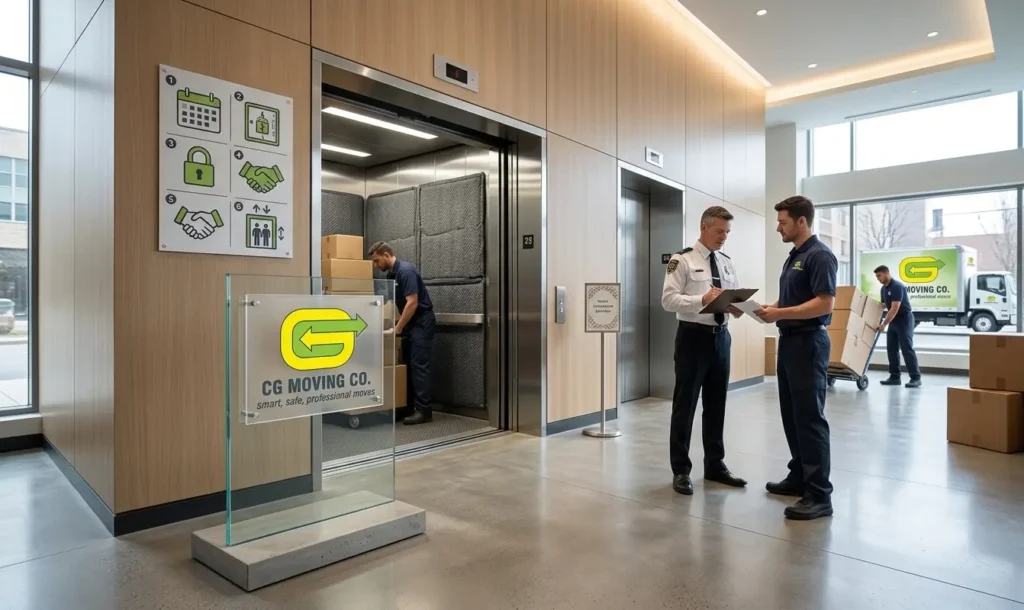
After-hours and weekend moves are worth the extra coordination when your business cannot afford a single day of downtime, but they are not necessary for every office relocation. CG Moving Company runs both standard daytime moves and after-hours moves regularly across the Bay Area, and the right choice usually comes down to building access rules and how disruptive a daytime move would be to the work still happening around it. For the fundamentals of the broader timeline, see our guide on how to plan an office move without losing a workday.
What makes a move worth doing after hours or on a weekend?
Zero tolerance for downtime, or a building that restricts daytime access.

Some businesses genuinely cannot afford to have the office offline during the week. Others operate in buildings where the property management restricts freight elevator use, loading dock access, or noise during business hours. Either situation is a strong case for moving outside standard hours, something our CG Moving Company crews handle on a regular basis across San Francisco and the Peninsula.
After-hours moves tend to make sense for:
- Law firms, financial services, and healthcare offices with daily deadlines
- Buildings that require after-hours freight elevator reservations anyway
- Companies with IT systems that need an extended maintenance window
- Multi-tenant buildings where daytime noise would disrupt neighboring offices
When is a standard business-hours move the better fit?
Smaller offices with flexible schedules and simple building access.
Not every company needs the premium of after-hours labor. A smaller office, a flexible team, or a building with generous loading dock hours can often move comfortably during a normal business day, especially if the move happens on a day with lighter foot traffic.
Standard-hours moves work well when the team can shift to remote work for a day or two, when the building does not restrict daytime moving activity, and when the office does not run on a tight client-facing schedule.
How do you plan staffing and timing for an after-hours move?
Confirm building access windows first, then build the crew schedule around them.
Buildings almost always require advance notice for after-hours freight elevator use, loading dock access, and sometimes a security escort. That approval process needs to happen before you lock in a moving date, not after.
Once access is confirmed, we schedule the crew to start as soon as the building allows, typically right after the last employee leaves on a Friday, and build in a full Sunday as a buffer before Monday. That buffer is what actually protects against a late start or an unexpected delay turning into a missed Monday opening.
Factor | After-Hours or Weekend Move | Standard Business-Hours Move |
|---|---|---|
Downtime | Minimal to none | Partial day likely |
Building access | Works around freight elevator or noise rules | Requires daytime access approval |
Staffing | Crew works evening or weekend shifts | Standard daytime crew |
Best fit | Client-facing or deadline-driven businesses | Smaller, flexible-schedule offices |
After-hours moves cost more in labor, but for a business that cannot take a day offline, the math usually works out in favor of the premium. Our commercial moving team can review your building’s access rules and recommend which schedule fits. Contact us to get a building-specific recommendation before you commit to a date.
Frequently Asked Questions
Can we split a move between a weeknight evening and a full weekend day?
Yes, and it’s actually a common setup for larger offices. A lighter evening session handles disconnecting workstations and prepping for the move, then the bulk of the loading and reinstallation happens over the weekend when the crew has a full, uninterrupted block of time.
Does an after-hours move require a different certificate of insurance than a daytime move?
Not typically. The same certificate of insurance that covers a daytime move usually covers an after-hours or weekend one, since the coverage is tied to the job itself rather than the hour it happens. Your building management may still want the COI submitted further in advance for an after-hours request, so check that timeline separately.
What happens if the building's after-hours approval falls through close to the move date?
We fall back to planning a standard business-hours move on the same date if approval doesn’t come through in time, since the crew and truck are already reserved. It’s part of why we recommend starting the building access request as early as possible, so there’s room to adjust the plan if needed.
Who from our team needs to be on site during an after-hours or weekend move?
At minimum, someone who can make decisions on the spot, point out anything that isn’t moving, and sign off at the end of the job. For a weekend move spanning more than one shift, having that person available by phone for the parts they can’t attend in person is usually enough.
Whether your move happens on a Tuesday night or a Saturday, reach out and we’ll map the staffing plan to your actual building rules.