Reserving a freight elevator is usually a required step for moving into or out of a building with one, and it needs to happen before moving day, not on it. At CG Moving Company, we coordinate freight elevator reservations as part of residential moves into Bay Area apartment and condo buildings on a regular basis.
Who Do You Actually Contact to Reserve It?
Usually building management, a concierge desk, or a leasing office.
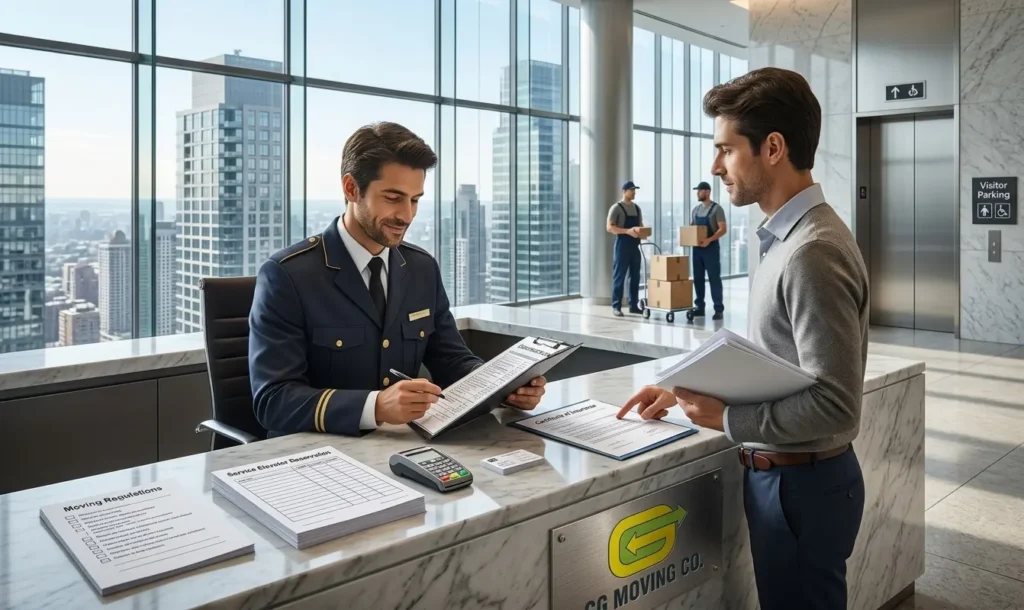
The contact for a freight elevator reservation depends on the building, but it’s almost always building management, a concierge or front desk, or a leasing office rather than the moving company itself. Some buildings have an online portal for booking, while others handle it by phone or email. If you’re unsure who to contact, your lease paperwork or a quick call to the front desk usually clears it up fast, and it’s worth doing this before, not after, you’ve locked in a moving date with your crew.
What Information Will You Need to Provide?
Your move date, estimated time window, and mover’s insurance details.
Most buildings will ask for your move date, a specific time window (often in two- to four-hour blocks), and proof of insurance from your moving company, usually in the form of a certificate of insurance naming the building as additional insured. Some buildings also ask for the moving company’s name and contact information directly, so it’s worth having that information on hand before you call to book.
How Far in Advance Should You Book the Elevator?
As soon as your move date is confirmed, ideally two or more weeks ahead.
Booking as soon as your move date is confirmed gives you the best shot at a convenient window, since freight elevator slots are often limited and popular times (weekend mornings, end-of-month dates) fill up fast in buildings with multiple units moving in the same season. Two or more weeks of advance notice is a reasonable target for most buildings, though some require even more lead time, so it’s worth asking about the booking window specifically rather than assuming.
What Size and Weight Limits Should You Check?
Ask about elevator dimensions and weight capacity for large furniture.
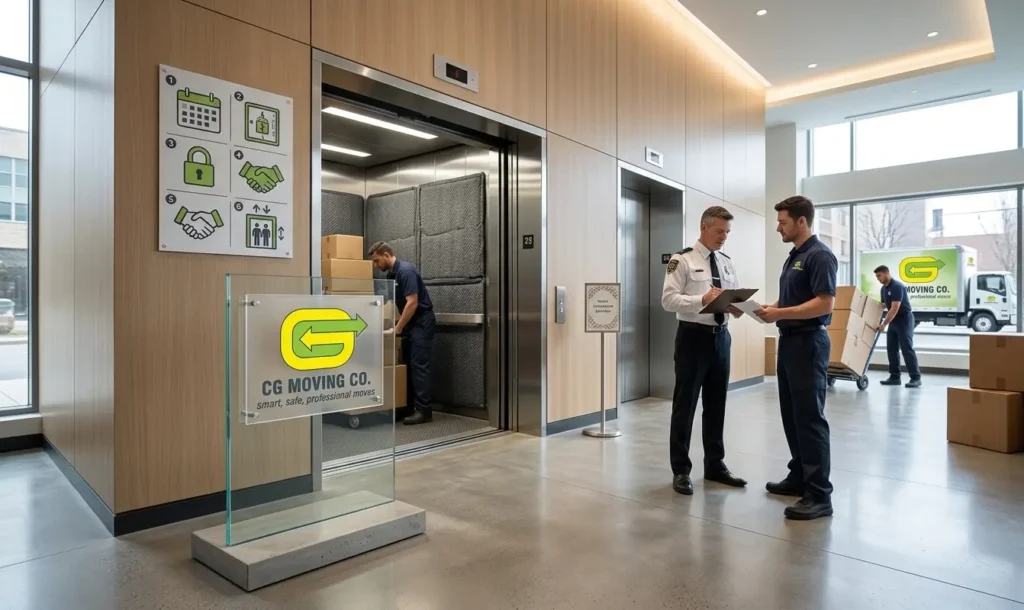
Freight elevators vary significantly in size between buildings, and it’s worth confirming the interior dimensions and weight capacity before moving day, especially if you have large furniture like a sectional sofa, a wardrobe, or an oversized mattress. If a piece won’t fit the elevator, buildings sometimes allow an alternate plan using stairs for that single item, but that needs to be sorted out in advance, not discovered with the piece sitting in the hallway.
What Happens if You Don't Reserve It in Advance?
You may be denied access or bumped to a less convenient slot.
Skipping the reservation step can mean being turned away at the loading dock, having to wait for an unscheduled opening, or being bumped to whatever slot is left, which may not line up with your crew’s schedule. Since most high-rise buildings treat freight elevator access as a hard requirement rather than a suggestion, it’s one of the first things to confirm once your move date with CG Moving Company is set.
A freight elevator reservation is a small task that prevents a big headache on moving day, as long as it’s handled with the building ahead of time. If you’d like help figuring out what your building will need from your moving company for this process, reach out to our team and we’ll get you the documentation your building requires.
Frequently Asked Questions
Does CG Moving Company Handle the Elevator Reservation for You?
The reservation itself is almost always made by the resident or tenant, since most buildings only accept booking requests from the person on the lease or the unit owner. What we do is give you the details the building will ask for, like our certificate of insurance and estimated time window, so you can complete the booking yourself. If your building allows a moving company to book directly, we’re glad to do that instead once you confirm it’s allowed.
What if the Building You're Moving Into Doesn't Have a Freight Elevator at All?
Buildings without a freight elevator usually have their own rules about using a passenger elevator for moving, often requiring protective padding and a scheduled time block similar to a freight reservation. Some older walk-up buildings have no elevator at all, which means the move goes entirely by stairs. Either way, the same lead time applies: confirm the building’s rule before moving day rather than discovering it with a truck parked outside.
Do You Need Separate Elevator Reservations for Both the Old and New Buildings?
Yes, each building sets its own freight elevator rules, so a reservation at your old address does not cover the new one. Both buildings may ask for the same documents, like your move date and certificate of insurance, but each requires its own booking and its own confirmation. We factor both windows into the day’s schedule once you share them with us.
Can You Extend Your Freight Elevator Reservation if the Move Runs Long?
Most buildings allow a reservation extension if you call before the original window ends, though availability depends on whether another resident has the next slot booked. It’s worth asking the building what their extension policy is when you first reserve the elevator, not after you’re already running late. Building that buffer into your original booking, when the building allows it, avoids the issue altogether.
If you’re not sure what your specific building will ask for, tell us the address and we’ll help you figure out what to request.