An apartment-to-apartment move within the same building looks very different on moving day than a move across the city, even though both are technically “apartment moves.” At CG Moving Company, we plan residential moves around these differences rather than treating every apartment move the same way.
How Does a Same-Building Move Actually Work?
Often faster, using hallways or a single elevator instead of a truck.
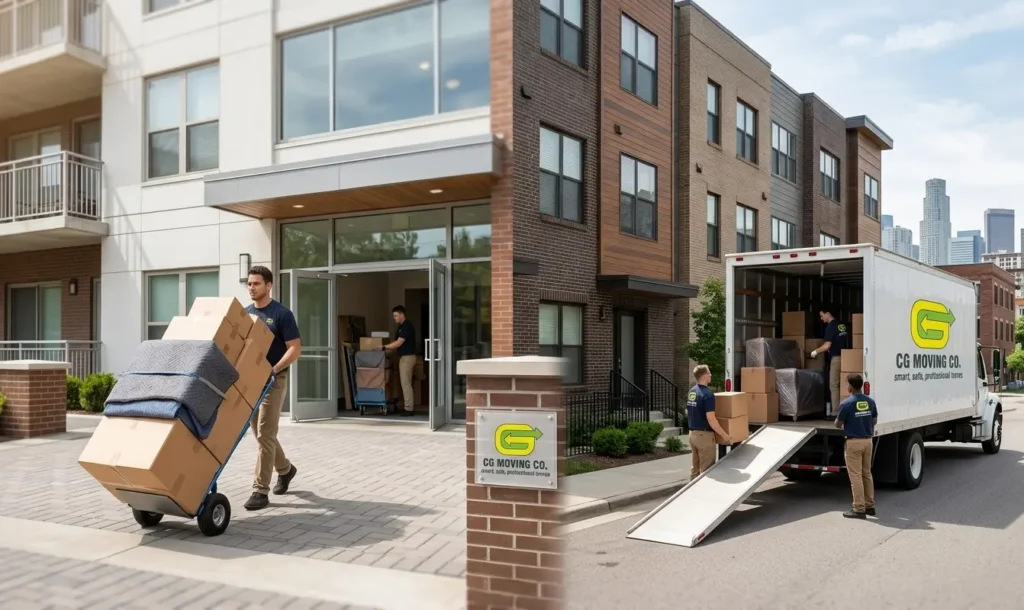
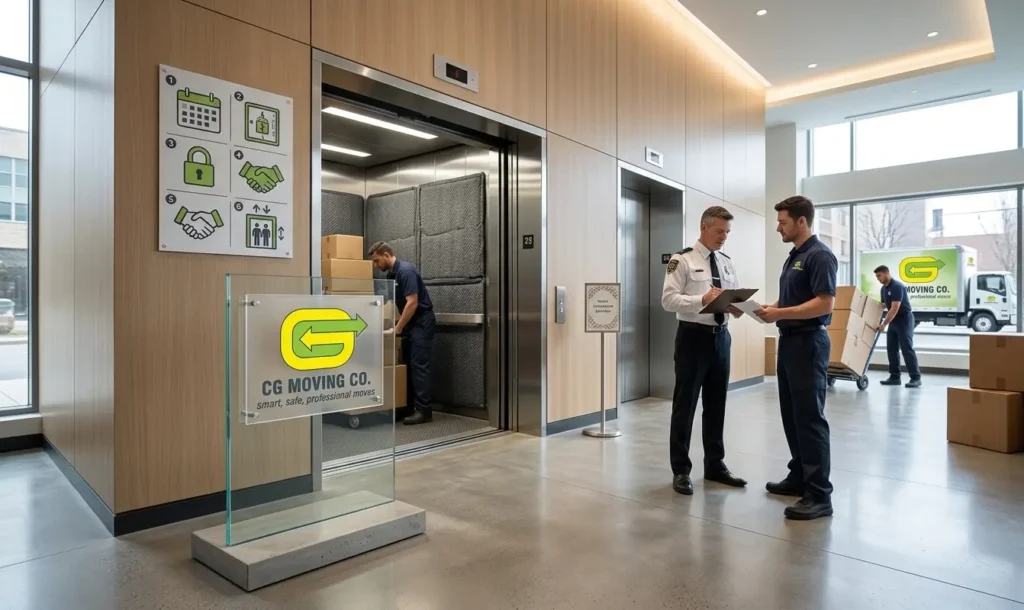
A same-building move, moving from one unit to another within the same property, often skips the need for a full moving truck entirely, especially for shorter distances within the building. Items might move via hallway, stairwell, or a single elevator trip rather than being loaded and unloaded from a vehicle. This typically makes same-building moves faster and more straightforward, though building rules around elevator reservations and protective coverings generally still apply the same way they would for any move.
What Changes With a Cross-City Apartment Move?
Transport time, parking logistics, and two separate buildings’ rules.
A cross-city apartment move involves everything a same-building move doesn’t: real transport time, parking or loading logistics at both the old and new address, and often two entirely different buildings with their own separate sets of rules. Traffic and distance become real factors in scheduling, and the crew needs to account for loading at one location and unloading at another, rather than moving directly between two points in the same building.
Do Both Moves Still Require Building Paperwork?
Yes, often from two buildings instead of one for cross-city moves.
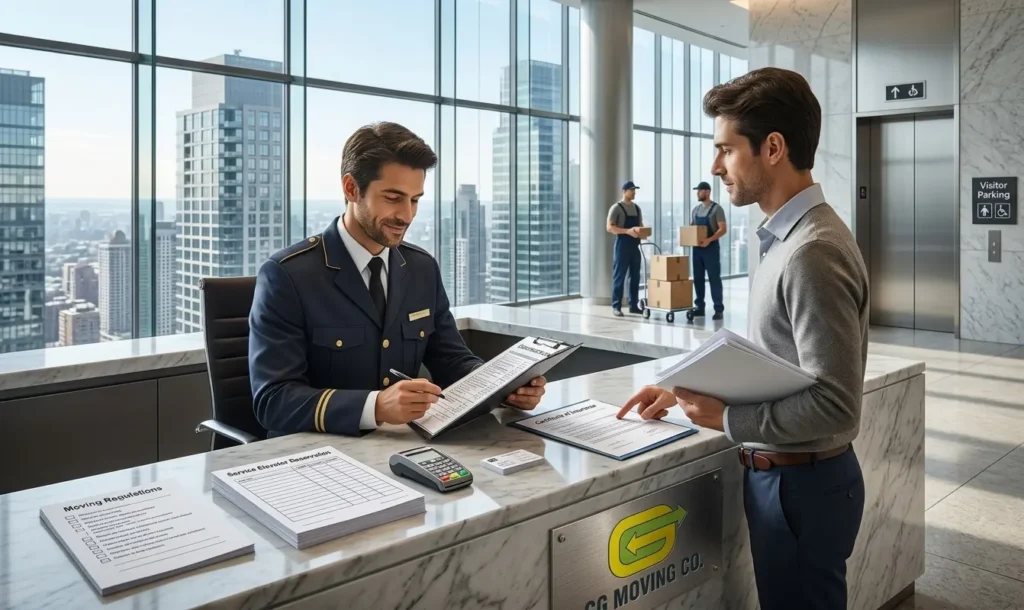
Yes, both types of moves usually involve building paperwork, but cross-city moves typically mean dealing with two separate sets of requirements rather than one. That could mean two certificates of insurance, two reserved elevator windows, and two different sets of move-in and move-out rules to track. Questions worth asking your leasing office apply at both ends in a cross-city move, not just the new address.
Which Move Type Is Typically Faster?
Same-building moves are usually quicker with simpler logistics.
Same-building moves are generally the faster of the two, often wrapping up in a few hours since there’s no transport time and frequently no full truck involved. Cross-city moves take considerably longer, often a full day, once you factor in loading, driving, parking, and unloading at a completely separate address. The exact difference depends on distance and building logistics at both ends, but the general pattern holds across most Bay Area moves we handle.
What Should You Confirm Before Either Type of Move?
Both buildings’ specific rules, even if one is your own.
Regardless of move type, it’s worth confirming both buildings’ specific rules rather than assuming your current building’s rules carry over, or that a same-building move means no rules apply at all. Elevator reservations, COI requirements, and move-in windows are set independently by each building. The team at CG Moving Company confirms these details for both addresses as part of planning any apartment move, same-building or cross-city.
Factor | Same-Building Move | Cross-City Move |
|---|---|---|
Transport involved | Often none, or a very short distance | Full transport across the city, with real drive time |
Building paperwork | One building’s requirements to confirm | Two separate buildings’ requirements, often different |
Parking logistics | Usually simpler, sometimes no truck needed | Requires parking or loading access at both ends |
Typical overall time | Often several hours at most | A full day in many cases, depending on distance |
Same-building and cross-city apartment moves share a label but little else in terms of actual logistics, from transport time to building paperwork. If you’re planning either type of move, contact our team for a plan built around your specific buildings rather than a generic apartment-move estimate.
Frequently Asked Questions
Can we use a smaller crew for a same-building move since there's no truck involved?
Often yes, since a same-building move usually needs fewer hands than loading and unloading a truck would require. We size the crew based on your unit’s inventory and the building’s layout, stairs versus elevator, hallway length, rather than assuming a standard truck-based crew size applies.
What if our old and new apartments are in the same building but on different floors with different elevator rules?
We treat that the same way we’d treat two separate buildings, confirming the specific elevator reservation and protective covering rules for each floor or wing if the building manages them differently. It’s worth asking your property manager about directly, since not every building applies uniform rules across the property.
Is a cross-city move ever faster than a same-building move?
It’s uncommon, but it can happen if the same-building move involves a long hallway carry, multiple elevator trips, or a building with strict single-elevator-at-a-time rules, while the cross-city move has easy parking and ground-floor access at both ends. Distance isn’t the only variable, so we look at the specific access conditions rather than assuming building type decides speed.
Do we still need a certificate of insurance if we're only moving within the same building?
Most buildings still require one for any move using common areas like hallways, stairwells, or a shared elevator, even for a same-building relocation. Check with your building management directly, since COI requirements are usually tied to using those shared spaces rather than the distance being moved.
Same building or across town, tell us your two addresses and we’ll confirm both buildings’ specific requirements before moving day.