Most people sign a bill of lading on move day without reading past the total price, which is exactly backward. At CG Moving Company, the bill of lading is the actual contract for your move, not paperwork to get through quickly, and it spells out everything the verbal estimate and the written estimate were supposed to agree on. Our guide on how a moving estimate actually gets built explains where the numbers on this document come from in the first place.
What exactly is a bill of lading?
It’s the legal contract and receipt covering your shipment and its terms.
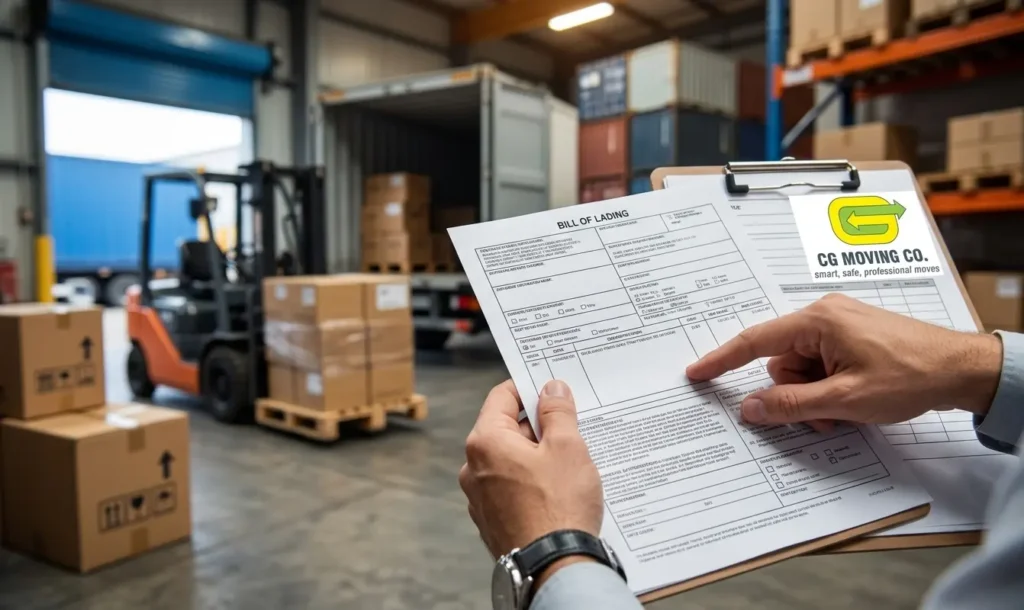
It documents what the mover is transporting, under what terms, for what price, and with what liability. Once you sign it, it governs the move, which is why reading it matters more than reading the original marketing estimate.
What should be listed on it?
Inventory, pricing terms, delivery window, and liability coverage should all appear.
A complete bill of lading leaves little room for surprise once the truck pulls away.
- A full inventory of items being moved
- Pricing terms, including whether the estimate is binding or non-binding
- The expected pickup and delivery window
- The liability and valuation coverage that applies to your shipment
What should you check before you sign?
Confirm the inventory, price terms, and delivery date match what you agreed to.
Compare it line by line against the estimate you were given, and ask about anything that doesn’t match. A reputable mover expects this and will walk through it with you rather than rush you to sign.
What happens if something on it turns out to be wrong later?
The signed bill of lading is what any dispute gets measured against.
If a disagreement comes up over price, damage, or delivery timing, this document is the reference point, not your memory of the phone call with the sales team. That’s exactly why it’s worth five extra minutes before you sign.
Should you keep a copy after the move is finished?
Yes, keep a signed copy until any claim window has fully closed.
Hold onto your copy, along with photos of your belongings before the move, until well after delivery. If you need to file a claim for damage or a missing item, the bill of lading is usually the first document anyone asks for, and having it on hand speeds up the whole process.
Reading the bill of lading before you sign is the single easiest way to avoid a dispute later. If you’re still comparing moving companies, see our list of questions to ask a moving company before you hire one, or contact CG Moving Company for a clear, complete estimate from the start.
Frequently Asked Questions
Can anything on the bill of lading still be changed after we've signed it?
Changes after signing are possible but need to be documented in writing and agreed to by both sides, rather than handled as a verbal adjustment on the spot. This usually comes up if the actual inventory turns out to differ from what was originally estimated. We’d rather catch a discrepancy before you sign than amend the document afterward, which is part of why we encourage a careful review at pickup.
Does the valuation or insurance coverage we chose show up on the bill of lading?
The valuation coverage you selected appears directly on the bill of lading, since it’s part of the terms governing your shipment, not a separate side document. Reading that section confirms the coverage level matches what you actually agreed to when you booked. If it doesn’t match, that’s exactly the kind of discrepancy worth raising before signing.
What should we do if the crew asks us to sign before the truck is fully loaded?
It’s reasonable to ask for a few minutes to review the document properly, even with the crew ready to go, since signing is what makes the terms binding. A reputable crew expects this and won’t rush you through it. If the final inventory isn’t confirmed yet, ask that it be added before you sign rather than signing a document with blanks left for later.
Is the bill of lading the same thing as the estimate we got earlier in the process?
No, the estimate and the bill of lading are different documents serving different purposes. The estimate is a projection prepared before the move, while the bill of lading is the actual contract and receipt you sign on move day, reflecting what’s really being transported and under what terms. Comparing the two side by side is exactly how you catch a change between what was quoted and what’s actually happening.
If anything on your bill of lading doesn’t look right, ask your CG Moving Company crew before you sign, not after the truck pulls away.