High-rise buildings almost always have their own move-in requirements separate from your lease, and missing one can mean a delayed or rescheduled moving day. At CG Moving Company, we handle residential moves into high-rises across the Bay Area regularly, and the requirements tend to fall into a predictable handful of categories.
Will the Building Require a Certificate of Insurance?
Most high-rises require a COI naming the building as additional insured.
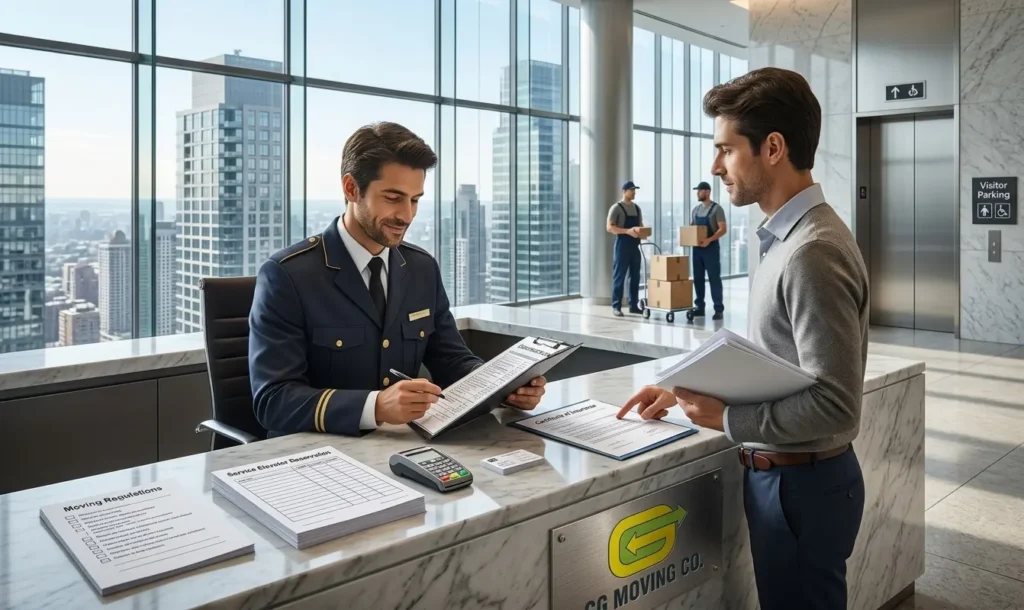
A certificate of insurance, or COI, is one of the most common high-rise requirements, and it typically needs to name the building or management company as an additional insured party for the move date. Buildings ask for this to confirm the moving company carries adequate liability and worker’s comp coverage in case of damage to common areas, since they’re responsible for protecting their property and other residents. This document usually needs to be submitted a few business days before the move, not the morning of.
Do High-Rises Require a Reserved Moving Window?
Yes, most schedule move-ins into specific time blocks or elevator slots.
Nearly every high-rise schedules move-ins into a specific time window rather than allowing move trucks to show up whenever, since buildings need to manage freight elevator access and loading dock use across multiple residents. This window is often booked through building management or a concierge desk, and availability can fill up during busy move months. Reserving your window as soon as your move date is set, rather than a week before, avoids getting stuck with a less convenient slot.
Are There Rules About Which Elevator You Can Use?
Often, yes. Many require the freight or service elevator only.
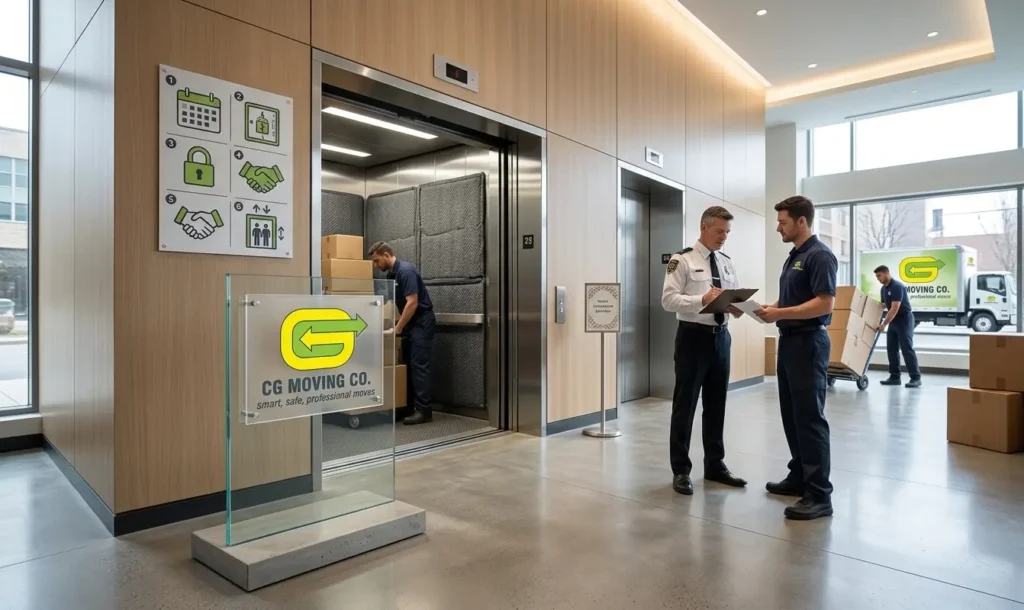
Many high-rises restrict moves to a designated freight or service elevator rather than the passenger elevators, partly to protect finishes and partly to keep regular elevator service available to other residents. If you’re reserving a freight elevator for the first time, it helps to ask the building about size limits, since furniture that doesn’t fit the freight elevator sometimes needs an alternate plan, like stairs for a single large piece.
Will the Building Ask About Protective Floor and Wall Coverings?
Many require hallway and elevator padding during move-in.
Protective coverings for hallway floors, walls, and elevator interiors are a common requirement, meant to prevent scuffs and dents during the move. Some buildings provide this padding themselves and charge a fee, while others expect the moving company to bring it. Either way, this is worth confirming ahead of time so the CG Moving Company crew arrives with the right equipment rather than discovering a requirement at the loading dock.
What Happens if You Miss a Building Requirement?
Expect delays, rescheduling, or being turned away at the door.
Missing a building requirement, whether it’s a COI, a reserved window, or an elevator restriction, usually means a delay at best and a full reschedule at worst, since most buildings won’t make exceptions on move day itself. The safest approach is contacting building management as soon as your move date is set, getting their requirements in writing, and sharing that list with your moving company well in advance rather than assuming standard logistics will cover it.
High-rise move-ins run smoothly when the building’s own requirements are handled days ahead of time, not discovered at the loading dock. If you’re moving into a high-rise and want help coordinating building requirements with your move, get in touch with our team before your date is locked in.