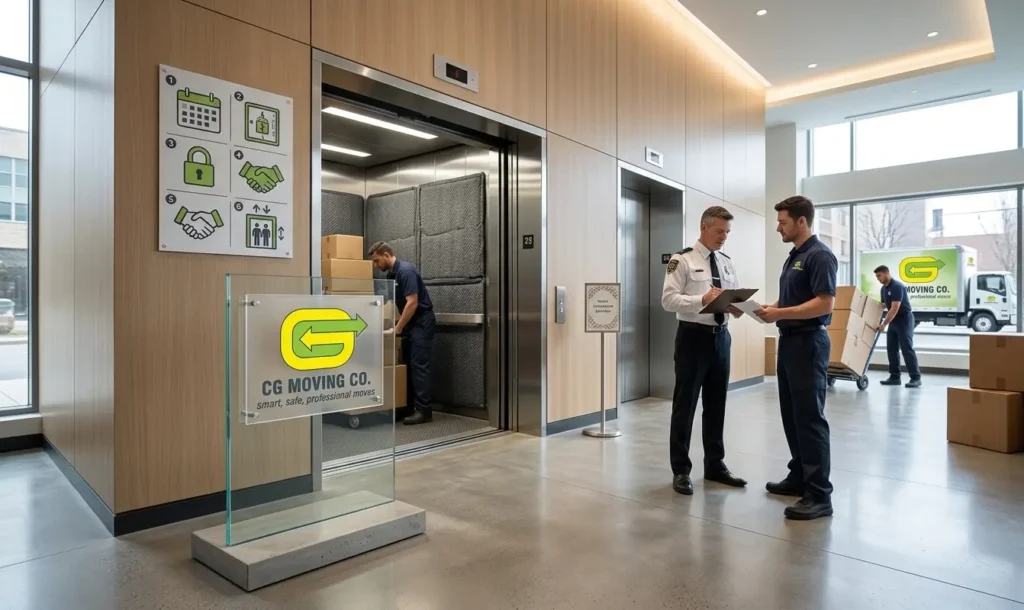
A phased move relocates one department or floor at a time instead of the whole company in a single weekend, which keeps the rest of the business running while the move is underway. CG Moving Company builds phased schedules for clients whose operations cannot fully pause, coordinating each department’s move around the ones before and after it. This approach pairs well with after-hours and weekend moves for the departments that cannot be offline even during their own transition.
When does a phased move make more sense than a single weekend move?
When the business cannot fully pause, even for one weekend.

A single-weekend move is simpler, but it requires the entire company to be ready at once, including IT, furniture, and every department’s packing. If headcount is large, if departments depend on specialized equipment with long setup times, or if the business genuinely cannot shut down entirely for a weekend, phasing spreads that risk out.
Phasing also helps when the new space is not fully ready for every department on day one, letting you occupy finished floors or sections while remaining work continues elsewhere in the building.
How do you decide which department moves first?
Move the least interdependent team first, most interdependent last.
The first department to move should be the one least dependent on daily contact with everyone else, since early movers deal with the most disruption as the new space is still getting set up around them. Teams with heavy cross-department collaboration, like leadership or shared IT infrastructure, typically move last, once the receiving space and systems are proven out.
This also gives you a chance to fix problems with the first move, like elevator timing or furniture delivery delays, before the bigger, more interdependent moves happen later in the schedule. At CG Moving Company, we usually recommend running that first phase as a smaller test case for exactly this reason.
How do you keep departments connected during a phased move?
Temporary network and phone bridges between the old and new locations.
The hardest part of a phased move is not the physical relocation, it is keeping departments that are now in two buildings able to work together. This usually means setting up temporary network connectivity or call forwarding between locations, keeping shared file access working from both sites, and being clear with staff about which building houses which team during the transition window.
We coordinate the moving schedule with your IT team’s timeline for that connectivity, since a phase that moves faster than the network catch-up creates more disruption than it solves.
Factor | Phased Move | Single Weekend Move |
|---|---|---|
Business disruption | Spread across weeks, smaller each time | Concentrated into one weekend |
Readiness required | New space can be partially ready | New space must be fully ready at once |
Coordination complexity | Higher, multiple schedules | Lower, one schedule |
Best fit | Larger offices, departments with specialized setups | Smaller offices, simpler layouts |
Phasing trades a longer overall timeline for less disruption at any single point, which is the right trade for a lot of growing or operationally sensitive businesses. If you are planning a multi-department move, our commercial moving team can help map out the sequence. Get in touch and we will help plan the department order before you commit to a schedule.
Frequently Asked Questions
How long does a phased office move usually take from first department to last?
It varies by department count and building readiness, but phased moves commonly stretch across several weeks rather than happening over one weekend. We build the schedule around your specific department count and the pace at which the new space becomes ready, rather than a fixed timeline that applies to every office.
Do departments need duplicate furniture or equipment during the transition period?
Not usually. Furniture and equipment generally move with the department itself in its assigned phase, so there’s no need to duplicate desks or equipment across both locations at once. The exception is shared equipment, like a conference room system used by multiple departments, which we plan around separately.
How should employees be kept informed during a multi-week phased move?
We recommend the company communicate a phase schedule to staff early, showing which department moves in which week, so employees aren’t caught off guard by hallway construction or a colleague’s team relocating around them. We coordinate the physical schedule, but internal communication to staff is best handled by the company itself.
What happens if one phase runs behind schedule?
We adjust the following phase’s timeline rather than rushing a department that isn’t ready, since moving a team into a space that still has open issues usually creates more disruption than a short delay. We stay in contact with your facilities team throughout so a slip in one phase gets absorbed into the schedule rather than causing a cascade of problems.
Get in touch through our contact page and we’ll help map out your department order before you commit to a schedule.