Decluttering before a move saves time, effort, and space on the truck, and the Bay Area has more donation and disposal options than most people realize. At CG Moving Company, we walk through residential moves every week and consistently see the same categories of items that are easy to let go of before packing starts. Here’s where to start and where those items can actually go.
What's the Easiest Category to Declutter First?
Duplicates, expired items, and anything unused in the past year.
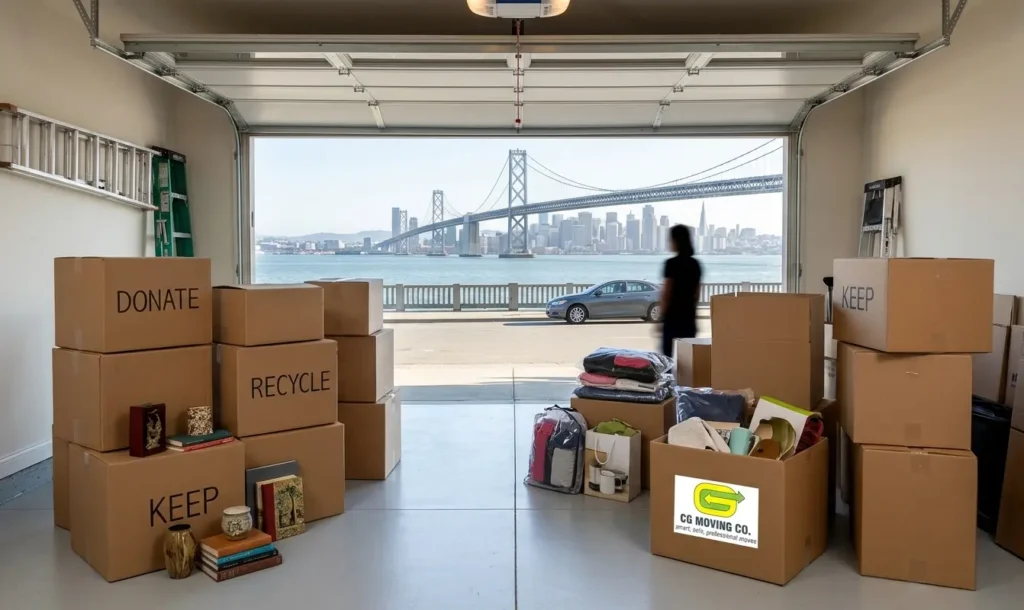
Start with the categories that require the least emotional decision-making: duplicate kitchen tools, expired pantry items and medications, old linens, and anything you haven’t used in the past year. Go through one room at a time rather than tackling the whole house in one pass, since that approach leads to decision fatigue fast. A simple three-pile system (keep, donate, discard) works better than overthinking each individual item. This first pass usually clears more volume than people expect before you even get to furniture or sentimental items.
What Should You Do With Furniture You're Not Keeping?
Donate usable pieces locally or arrange bulky-item pickup.
Furniture in good condition is usually the easiest thing to find a new home for, since several Bay Area nonprofits offer free pickup for donated pieces in decent shape. For items too worn for donation, most cities offer scheduled bulky-item curbside pickup, though you’ll need to check your specific city’s pickup days and advance scheduling requirements. If a piece is large, heavy, or hard to move on your own, it’s worth figuring out the disposal plan before moving day, not during it, since our crew’s time is better spent on items that are actually coming with you.
Where Can Clothing and Household Goods Go Locally?
Local donation centers, consignment shops, or textile recycling bins.
Clothing in wearable condition can go to local donation centers, many of which also accept household goods like linens, kitchenware, and small electronics in working order. Higher-end or barely worn clothing sometimes does well at a local consignment shop instead. Worn-out textiles that aren’t donation-quality, think stained sheets or threadbare towels, can often go into dedicated textile recycling bins rather than the trash, which several Bay Area waste programs now offer. Checking your city’s specific guidelines before a big donation run saves a second trip.
What About Electronics, Paint, and Hazardous Items?
Use certified e-waste and household hazardous waste drop-off sites.
Electronics, batteries, paint, and other household chemicals need to go through certified e-waste or household hazardous waste programs rather than regular trash or donation bins. Most Bay Area counties run dedicated drop-off events or permanent facilities for exactly this purpose, and many accept these items for free. This matters for your move too, since movers generally can’t transport certain hazardous materials on the truck, so sorting these out ahead of time avoids a last-minute scramble on moving day.
How Do You Decide What's Worth Packing Versus Replacing?
Weigh bulk and fragility against how easily it’s replaced.
When you’re unsure whether something is worth packing, weigh its bulk and fragility against how easily and affordably it could be replaced at the new place. A bulky, awkward item you’d happily replace with something from a local store usually isn’t worth the box, the padding, or the truck space. Sentimental or hard-to-replace items are worth the extra care, even if they’re a little inconvenient to pack. The team at CG Moving Company can also advise on this during your in-home walkthrough if you’re on the fence about specific pieces.
A thoughtful decluttering pass before moving day means less to pack, less to carry, and a lighter load overall, and the Bay Area has enough donation and disposal options that almost nothing has to go straight to the trash. If you’d like help figuring out what’s worth moving versus letting go of, schedule a walkthrough with our team before your packing starts.
Frequently Asked Questions
How far before moving day should decluttering actually start?
Start at least two to three weeks out if you can, since donation pickups and bulky-item curbside scheduling often need advance notice. Starting the week of your move usually means skipping donation in favor of faster options like disposal, which is avoidable with a little lead time.
What should you do with items that have sentimental value but you don't actually want to keep?
Consider photographing the item before letting it go, which preserves the memory without requiring the box space or the effort of keeping something you won’t use. Some families set these items aside for relatives to claim before deciding on donation or disposal.
Is it worth hiring a junk removal service instead of handling disposal yourself?
For a large volume of bulky or heavy items, yes, a junk removal service can clear more in one visit than a series of trips to a donation center or curbside pickup. For a smaller amount, the Bay Area’s donation and curbside options usually cover it without needing a separate service.
Can CG Moving Company help remove items during the move itself, not just pack them?
We can coordinate furniture removal and disposal as part of the move plan when you let us know in advance which items aren’t coming with you. It’s easier to build that into the schedule from the start than to add it on moving day itself.
Let our team know during your walkthrough which categories you’re still deciding on, and we’ll help you figure out the rest.