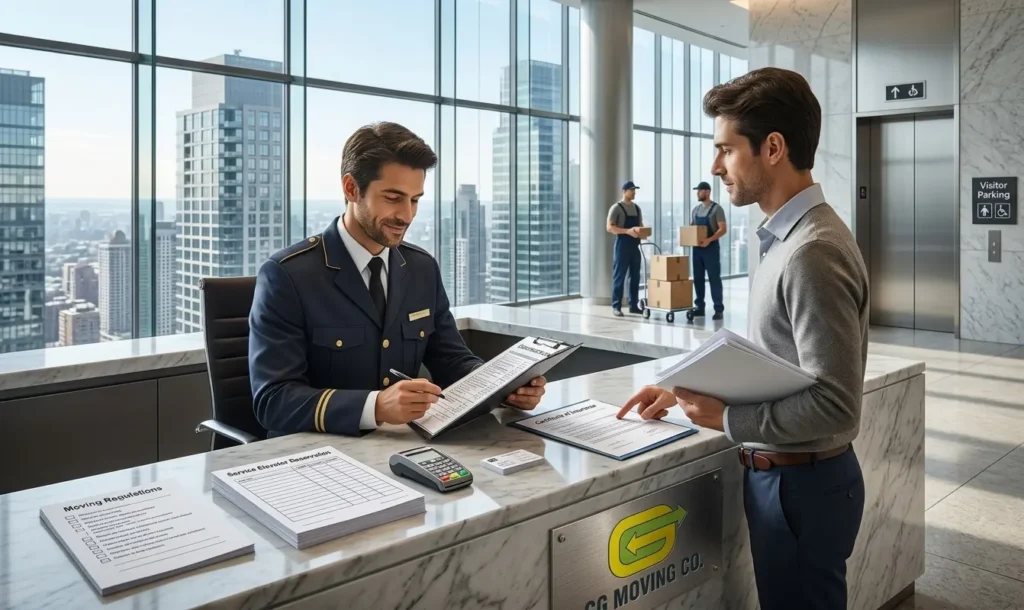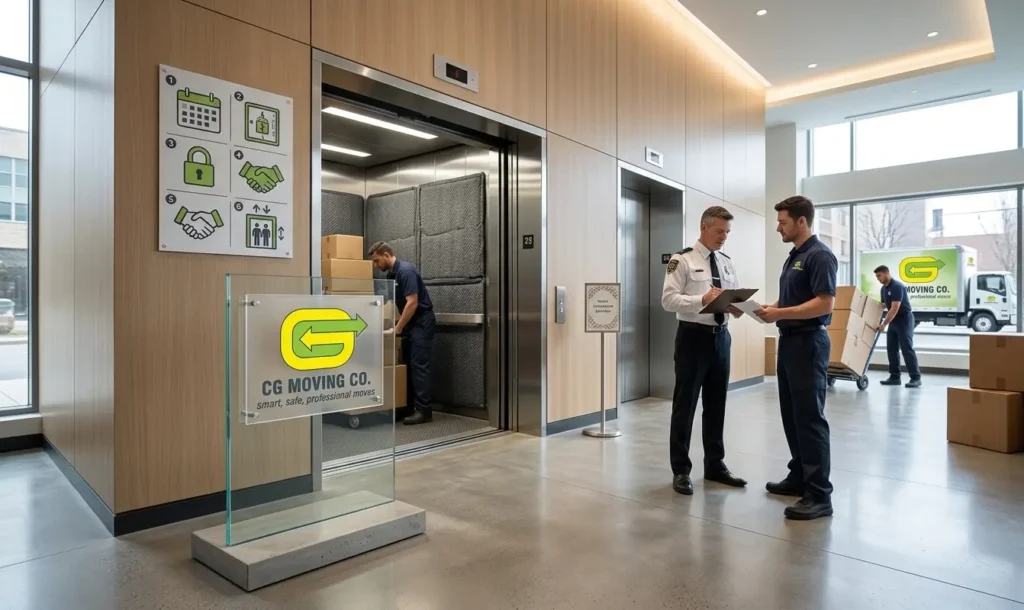
At CG Moving Company, we ask every San Francisco client the same early question: do we need a temporary parking permit for the truck, because in this city the answer is usually yes. The process runs through SFMTA, and it pairs naturally with figuring out elevator reservations in San Francisco apartment buildings if you live somewhere with a shared lobby, since both involve the same kind of advance planning.
When do you actually need a moving truck parking permit?
You need one whenever legal curb parking isn’t available on moving day.
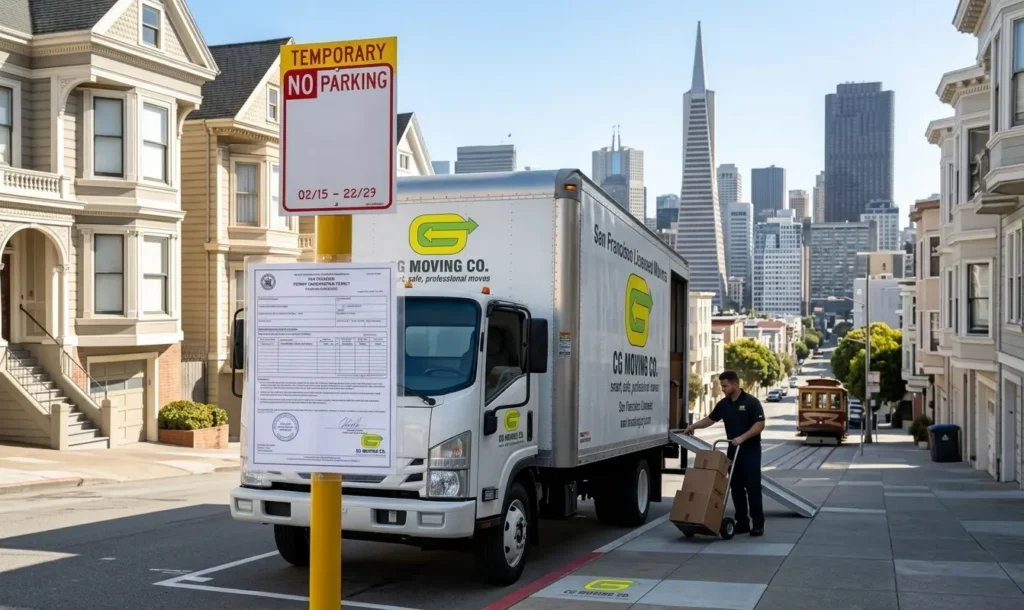
San Francisco’s dense blocks mean a moving truck often can’t just park out front. If your street has metered spots, a residential permit zone, or no realistic space for a full-size truck, you’ll need a temporary parking permit from the San Francisco Municipal Transportation Agency, or SFMTA, which manages curb access citywide. Without one, a crew can lose real time circling for parking or carrying items an extra half block, which adds hours to a bill that’s priced by the hour.
How do you apply for an SFMTA temporary parking permit?
Apply through SFMTA’s temporary parking permit program ahead of your move date.
SFMTA issues temporary parking permits that reserve curb space for a moving truck or container on a specific date. The agency’s own page on temporary parking permits covers eligible locations, fees, and how to apply, and it’s worth reading directly rather than relying on secondhand advice. Rules can vary by block and zone, and a permit approved for one street doesn’t automatically cover a different one nearby.
How far in advance should you apply?
Apply at least one to two weeks before your scheduled move.
SFMTA recommends applying with enough lead time for processing, generally one to two weeks before your move date. Weekday mornings and the last few days of the month tend to see more permit requests citywide, since that’s also when a lot of leases turn over, so applying early gives you a better shot at the exact date and spot you want. Wait too long, and you may end up settling for whatever is left.
What happens if you skip the permit?
You risk a ticket, towing, or no legal spot for the truck.
Parking a moving truck in a restricted zone without a permit can mean a citation, or in some cases towing, on top of the time lost looking for an alternate spot. It’s a cost most people don’t plan for. As a California intrastate carrier operating under Maximum Rate Tariff authority (MTR 0190922), we’re used to navigating city permit systems, and we flag the permit question with every San Francisco client before the day of the move, not during it, so nobody is scrambling when the truck shows up.
A parking permit is a small step that prevents a frustrating start to moving day in San Francisco. As San Francisco movers who deal with SFMTA rules on a weekly basis, we confirm your zone, apply through SFMTA with time to spare, and keep the rest of the move running on schedule. Reach out through our contact page and we’ll help you figure out exactly what your address needs.
Frequently Asked Questions
Does the permit apply only to a specific parking spot, or a general area?
SFMTA temporary parking permits typically reserve a specific stretch of curb near your address for the move date, not a general zone across the neighborhood. That’s part of why the application asks for your exact address and preferred dates, so the reserved space lines up with where the truck will actually be loading or unloading.
Do moving containers like PODS need the same permit as a moving truck?
Yes, a parking or curb-use permit through SFMTA generally applies to a moving container left at the curb the same way it applies to a truck, since both take up curb space that would otherwise be available to other vehicles. If you’re using a container rather than a truck crew, it’s still worth confirming the permit covers the full time the container will sit there, not just the loading day.
What if someone else is already parked in the spot when your truck arrives, even with a permit?
A permit reserves the space legally, but it doesn’t physically remove another vehicle parked there, so if someone else is in the spot, the next step is usually contacting SFMTA or, in some cases, the police for assistance with an unauthorized vehicle. This is uncommon, but it’s worth knowing the permit alone doesn’t guarantee an empty curb.
Does a multi-unit building ever need more than one parking permit for the same move?
If a building has multiple units moving on the same date, each move may need its own permit, since the permit is tied to the specific move and date rather than the building as a whole. We flag this for clients in larger buildings so each unit’s move gets its own reserved space instead of relying on one permit to cover everyone.
Reach out through our contact page and we’ll help confirm exactly what your San Francisco address needs for a permit.